
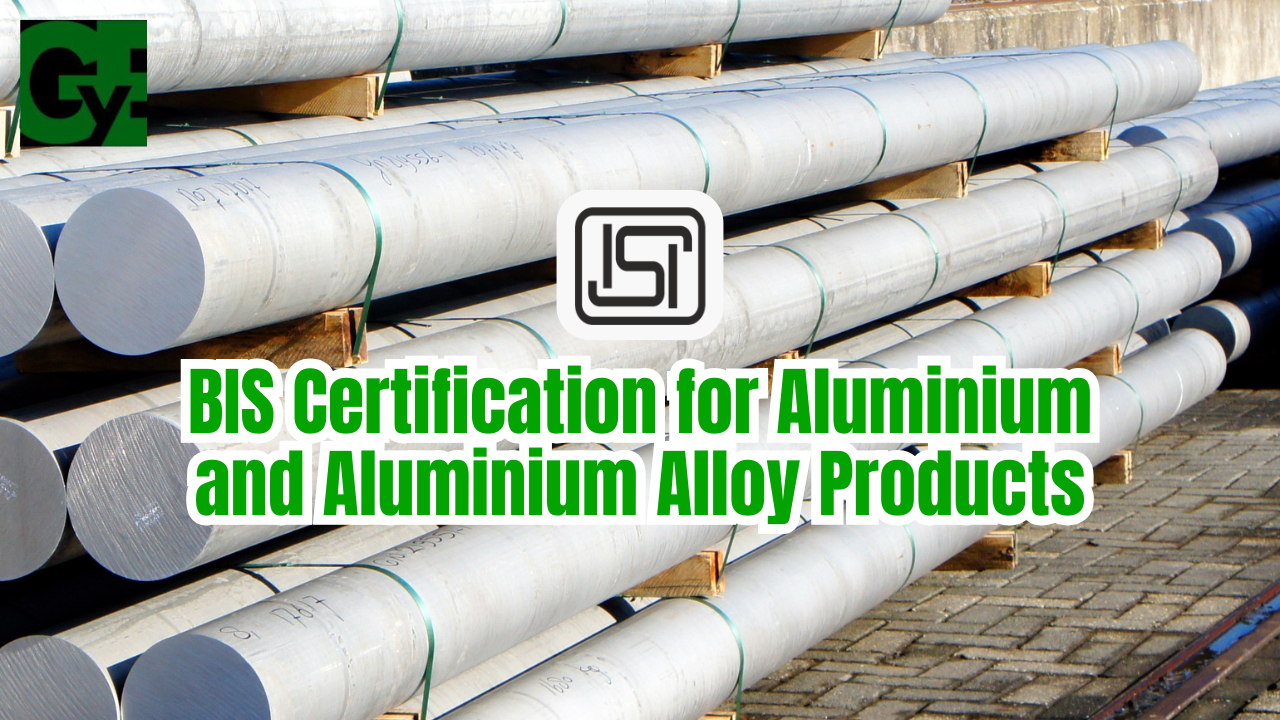
The Bureau of Indian Standards has issued the Aluminium and Aluminium Alloy Products (Quality Control) Order, 2026, making BIS certification mandatory for several aluminium products. This regulation aims to ensure product safety, quality, and standardization across industries such as construction, engineering, electrical, packaging, aerospace and consumer goods.
For manufacturers and importers dealing with aluminium products, compliance with this order is essential to continue legal production and sale in India.
The Aluminium and Aluminium Alloy Products QCO, 2026 supersedes the earlier 2025 order and came into effect from its publication in the Official Gazette.
Quality Control Order for Aluminium and Aluminium Alloy Products
Under this order:
- All specified aluminium products must conform to relevant Indian Standards (IS)
- Products must bear the BIS Standard Mark
- Certification must be obtained under Scheme-I of BIS Conformity Assessment Regulations
- BIS is the certifying and enforcement authority
Non-compliance may result in penalties under the BIS Act, 2016.
Short title and commencement-
(1) This order may be called the Aluminium and Aluminium Alloy Products (Quality Control) Order, 2026.
(2) It shall come into force on the date of its publication in the official Gazette.
Products Covered Under the Order
The QCO applies to a wide range of aluminium and aluminium alloy products used in various industries, including:
- Aluminium alloy tubes for irrigation purposes – welded tubes
- Aluminium alloy tubes for irrigation purposes – extruded tubes
- EC Grade Aluminium Rod (Continuous Casting and Rolling)
- Aluminium and aluminium alloy foil for pharmaceutical packaging
- Aluminium composite panel
- Corrugated aluminium sheet
- Aluminium alloy forging stock and forgings (aerospace applications)
- Wrought aluminium and aluminium alloy bars, rods and sections (general engineering)
- Wrought aluminium and aluminium alloy forging stock and forgings (general engineering)
- Wrought aluminium and aluminium alloy plate (general engineering)
- Wrought aluminium and aluminium alloy sheet and strip (general engineering)
- Wrought aluminium and aluminium alloy wire (general engineering)
- Wrought aluminium and aluminium alloy rivet stock (general engineering)
- Wrought aluminium and aluminium alloys – extruded round tube and hollow sections (general engineering)
- Wrought aluminium wire for electrical purposes
- Wrought aluminium and aluminium alloys for manufacture of utensils
- Wrought aluminium and aluminium alloy bars, rods, tubes, sections, plates and sheets for electrical applications
These products must meet their respective Indian Standards to be legally sold in the domestic market.
Phased Implementation for General Engineering Products
For certain wrought aluminium products:
- Large and medium enterprises: From 1 December 2026
- Small enterprises: From 1 March 2027
- Micro enterprises: From 1 June 2027
This phased approach provides MSMEs additional time to obtain BIS certification.
Exemptions Under the QCO
The order provides limited exemptions:
Export Products: Goods manufactured in India exclusively for export are exempt from BIS marking requirements.
Research and Development Imports: Manufacturers may import up to 200 kg per year of aluminium products for R&D purposes, subject to conditions:
- Products must not be sold commercially
- They must be disposed of as scrap after use
- Proper yearly records must be maintained and submitted to the government
MSME Relaxation: Micro and small enterprises receive extended compliance timelines, as mentioned above.
Penalties for Non-Compliance
Manufacturers, importers, or sellers who violate the provisions of this QCO may face legal action under the BIS Act, 2016, including fines and product seizure.
Selling non-certified products after the implementation date is strictly prohibited.
Impact on Manufacturers and Importers
This order significantly impacts businesses across multiple sectors:
- Aluminium manufacturers
- Construction material suppliers
- Electrical component manufacturers
- Packaging companies
- Engineering product manufacturers
- Importers of aluminium products
- OEMs and brand owners
Companies must align their production processes with Indian Standards and obtain BIS licenses before the applicable deadlines.
Conclusion
The Aluminium and Aluminium Alloy Products (Quality Control) Order, 2026 marks a major step toward improving product quality and safety in India’s aluminium sector. Businesses dealing with these products must act promptly to ensure compliance within the specified timelines.
If your company manufactures or imports aluminium products covered under this order, obtaining BIS certification is not optional – it is mandatory.
How GYE LLP Can Help
Obtaining BIS certification can be complex, involving technical documentation, factory audits, product testing, and regulatory procedures.
GYE LLP provides end-to-end BIS consultancy services, including:
- Eligibility assessment
- Applicable Indian Standard identification
- Documentation support
- Product testing coordination
- BIS application filing
- Audit preparation
- Post-certification compliance support
With expert guidance, manufacturers can achieve certification smoothly and avoid costly delays.
Email: satjindal@yahoo.co.in
Phone: +91 9313058678, 9718925753
Leave a Reply