
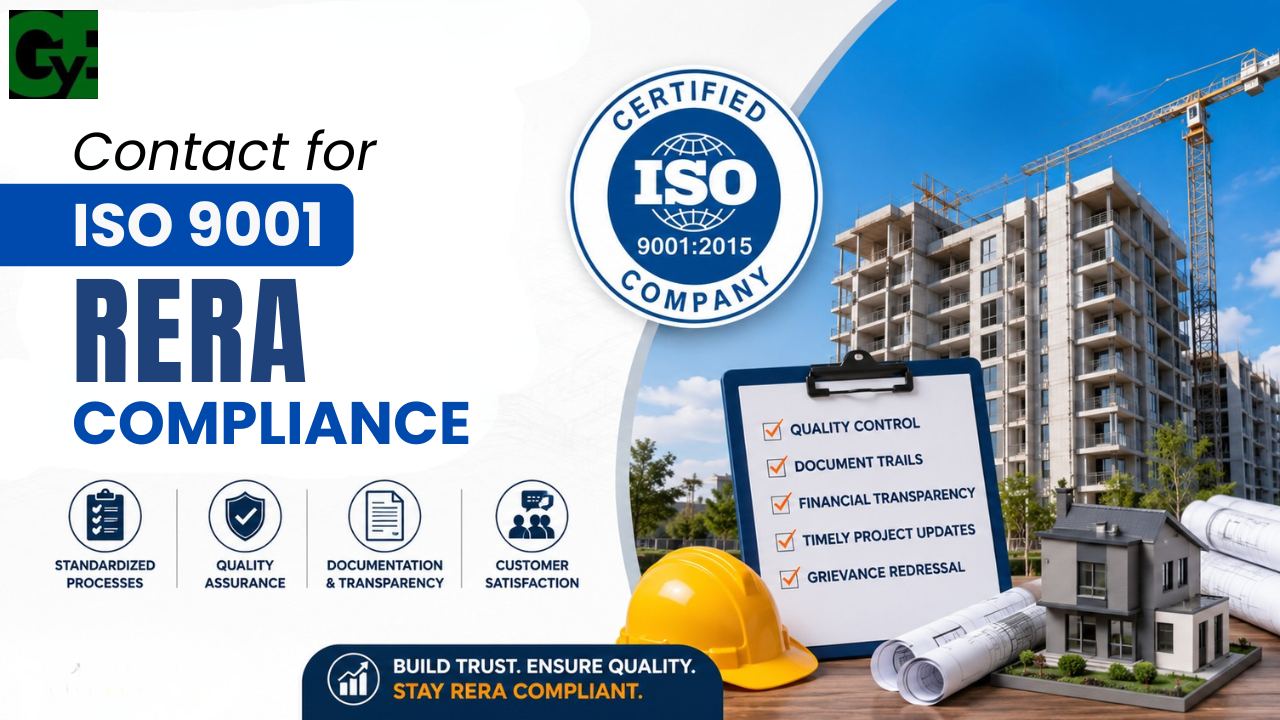
The real estate industry in India operates under strict regulatory requirements to ensure transparency, accountability, and quality in construction projects. One of the most important regulations governing this sector is the Real Estate (Regulation and Development) Act, 2016 (RERA). Developers are required to maintain accurate documentation, provide regular project updates, ensure financial transparency, and address customer grievances effectively.
While ISO 9001:2015 Quality Management System (QMS) certification is not mandatory under RERA, it serves as a powerful framework for developers looking to streamline their operations and maintain consistent compliance. By implementing ISO 9001, real estate companies can establish standardized processes, improve project quality, and create an organized documentation system that aligns closely with RERA requirements.
Gyellp help real estate developers implement ISO 9001 certification and build efficient quality management systems that support regulatory compliance and long-term business growth.
What is ISO 9001 for RERA Compliance?
ISO 9001:2015 is an internationally recognized Quality Management System (QMS) standard published by the International Organization for Standardization (ISO). It provides a structured framework for organizations to consistently deliver quality products and services while improving operational efficiency.
The standard focuses on:
- Customer satisfaction
- Risk-based thinking
- Process standardization
- Continuous improvement
- Documentation and record management
- Internal audits and management reviews
For real estate developers, these principles directly support the operational discipline required under RERA.
Why ISO 9001 is Important for RERA Compliance
RERA emphasizes transparency, quality construction, financial accountability, and timely project delivery. ISO 9001 strengthens these objectives by introducing standardized operating procedures across every stage of a project.
Some key benefits include:
- Better project documentation
- Improved contractor management
- Transparent operational workflows
- Consistent quality control
- Enhanced customer satisfaction
- Reduced compliance risks
- Improved audit readiness
Although RERA and ISO 9001 are separate frameworks, implementing ISO 9001 significantly simplifies compliance with many RERA obligations.
How ISO 9001 Supports RERA Compliance
1. Conduct a Gap Analysis-
The first step is to compare your existing business operations with ISO 9001 requirements.
During the gap analysis, developers should identify:
- Missing quality procedures
- Undefined workflows
- Weak documentation practices
- Inconsistent approval processes
- Compliance risks related to RERA reporting
This assessment creates a roadmap for building a Quality Management System that supports both operational excellence and regulatory compliance.
2. Standardize Process Documentation-
Documentation is one of the strongest pillars of ISO 9001.
Developers should establish documented procedures for every critical business function.
Procurement & Material Management
Create standardized procedures for:
- Vendor selection
- Material approval
- Material testing
- Incoming quality inspections
- Supplier performance evaluation
This ensures construction quality remains consistent throughout the project.
Financial Controls
ISO 9001 can support financial process standardization by documenting workflows related to:
- Customer payment tracking
- Fund utilization approvals
- Financial reporting
- Internal authorization processes
These documented controls help organizations maintain greater transparency and support compliance with RERA’s financial requirements, including escrow account management.
Subcontractor Management
Develop clear procedures for:
- Contractor qualification
- Work allocation
- Performance monitoring
- Site inspections
- Engineering approvals
- Quality verification
Clearly defined responsibilities improve accountability across all project stakeholders.
3. Implement Stage-Wise Technical Validations-
RERA requires developers to regularly disclose project progress and construction milestones.
ISO 9001 helps establish structured quality checkpoints throughout the construction lifecycle.
Developers should implement:
- Stage-wise quality inspections
- Internal quality audits
- Engineering verification processes
- Architect certification workflows
- Construction milestone documentation
A standardized tracking system ensures project progress reports remain accurate, timely, and well documented.
4. Establish a Customer Grievance Redressal System-
Customer satisfaction is one of the core principles of ISO 9001.
Developers should implement a formal complaint management system that includes:
- Complaint registration
- Investigation procedures
- Corrective actions
- Response timelines
- Customer feedback collection
- Complaint closure records
An effective grievance mechanism helps resolve buyer concerns quickly while reducing the likelihood of disputes and regulatory issues.
5. Obtain Third-Party ISO 9001 Certification-
After implementing the Quality Management System, organizations should undergo certification through an accredited certification body.
The certification process generally includes:
- Stage 1 Documentation Audit
- Stage 2 Implementation Audit
- Certification Decision
- Annual Surveillance Audits
- Recertification every three years
Certification demonstrates that your organization follows internationally accepted quality management practices.
Continuous Improvement After Certification
ISO 9001 is not a one-time exercise.
Organizations should continuously improve their Quality Management System through:
- Internal audits
- Management review meetings
- Risk assessments
- Corrective and preventive actions
- Employee training
- Process performance monitoring
Continuous improvement ensures documentation remains accurate, operational processes stay effective, and compliance activities are always audit-ready.
Why Choose Gyellp for ISO 9001 Certification?
Gyellp provide complete assistance for ISO 9001 implementation and certification for real estate developers across India.
Our services include:
- Gap Analysis
- QMS Documentation
- Process Mapping
- SOP Development
- Employee Training
- Internal Audit Support
- Certification Coordination
- Post-Certification Compliance Assistance
Our experts help organizations develop practical quality management systems that improve business performance while supporting regulatory compliance.
Conclusion
RERA has significantly transformed India’s real estate sector by promoting transparency, accountability, and consumer protection. While ISO 9001 certification is not a legal requirement under RERA, it provides a robust Quality Management System that helps developers standardize operations, strengthen documentation, improve customer satisfaction, and maintain audit-ready processes.
By implementing ISO 9001, developers can enhance operational efficiency, reduce compliance risks, and build greater confidence among buyers, investors, and regulatory authorities.
If you are planning to implement ISO 9001 Certification for your real estate business, Gyellp offers end-to-end consultancy services to help you achieve certification efficiently and establish a strong foundation for quality management and regulatory compliance.
Leave a Reply